

A platform reports an AI visibility score of 72. Before comparing it with another vendor's 58, ask whether either score uses the same questions, surfaces, denominator, and weights. Often the numbers are not comparable.
A buyer's evaluation should make the measurement method visible. Start with the observations the team needs, then assess whether a platform can collect and explain them reliably.
Distinguish marketing visibility from application observability
Marketing visibility tools observe how external answer systems mention or cite a brand. Application observability tools inspect a model-powered product you operate, such as its traces, latency, or evaluation results.
Both can be valuable, but they answer different questions and usually have different buyers. A tool that monitors your chatbot is not automatically evidence of your brand's presence in public assistants.
Use pass-or-fail requirements first
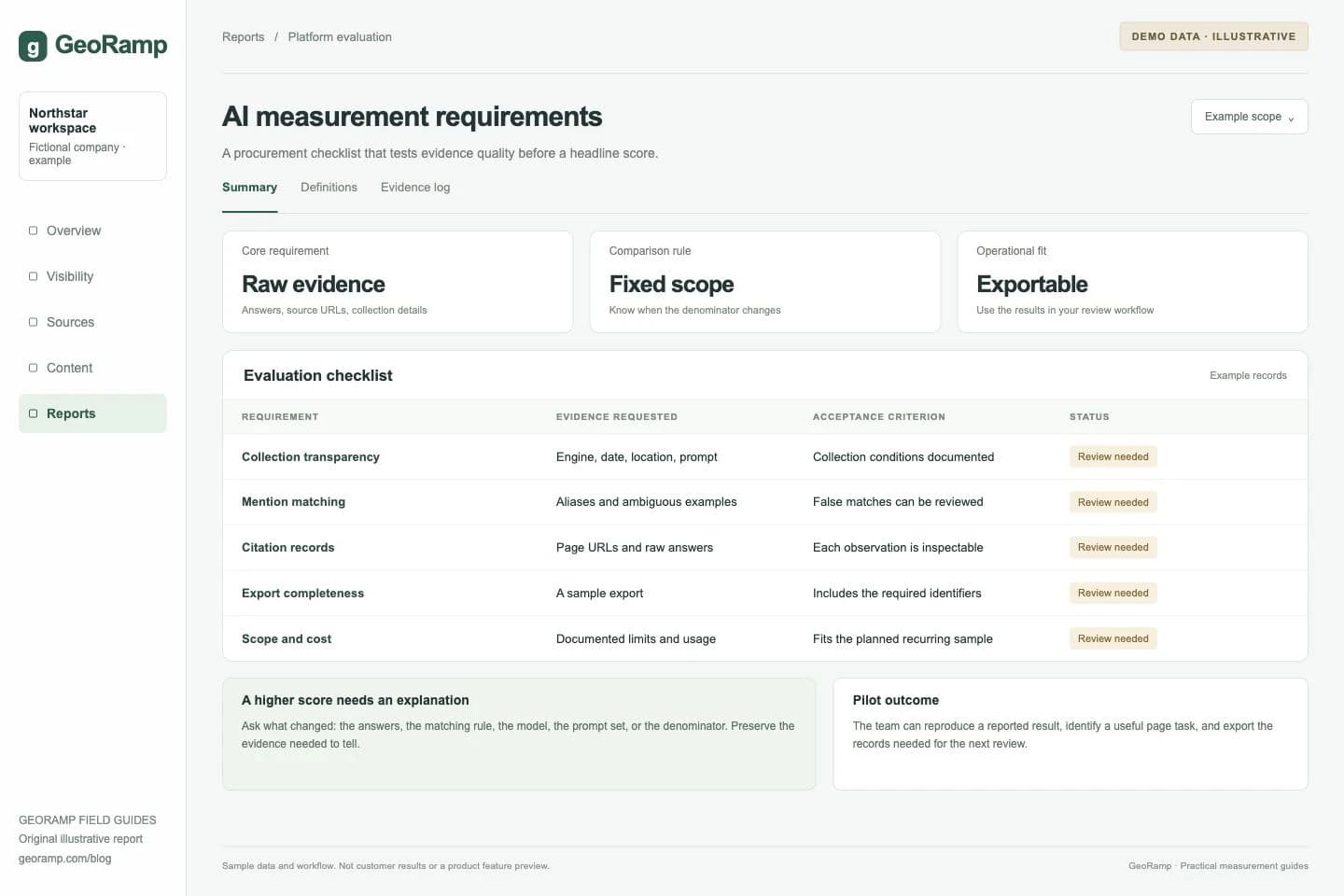
Define the surfaces, modes, languages, markets, and collection cadence you need. Require raw answer inspection, source URLs, clear failed-run handling, and exportable records where these are essential to the program.
Treat an unmet essential requirement as a gap, not a low score that attractive dashboard design can cancel out. Record what the vendor demonstrated and what remains unverified.
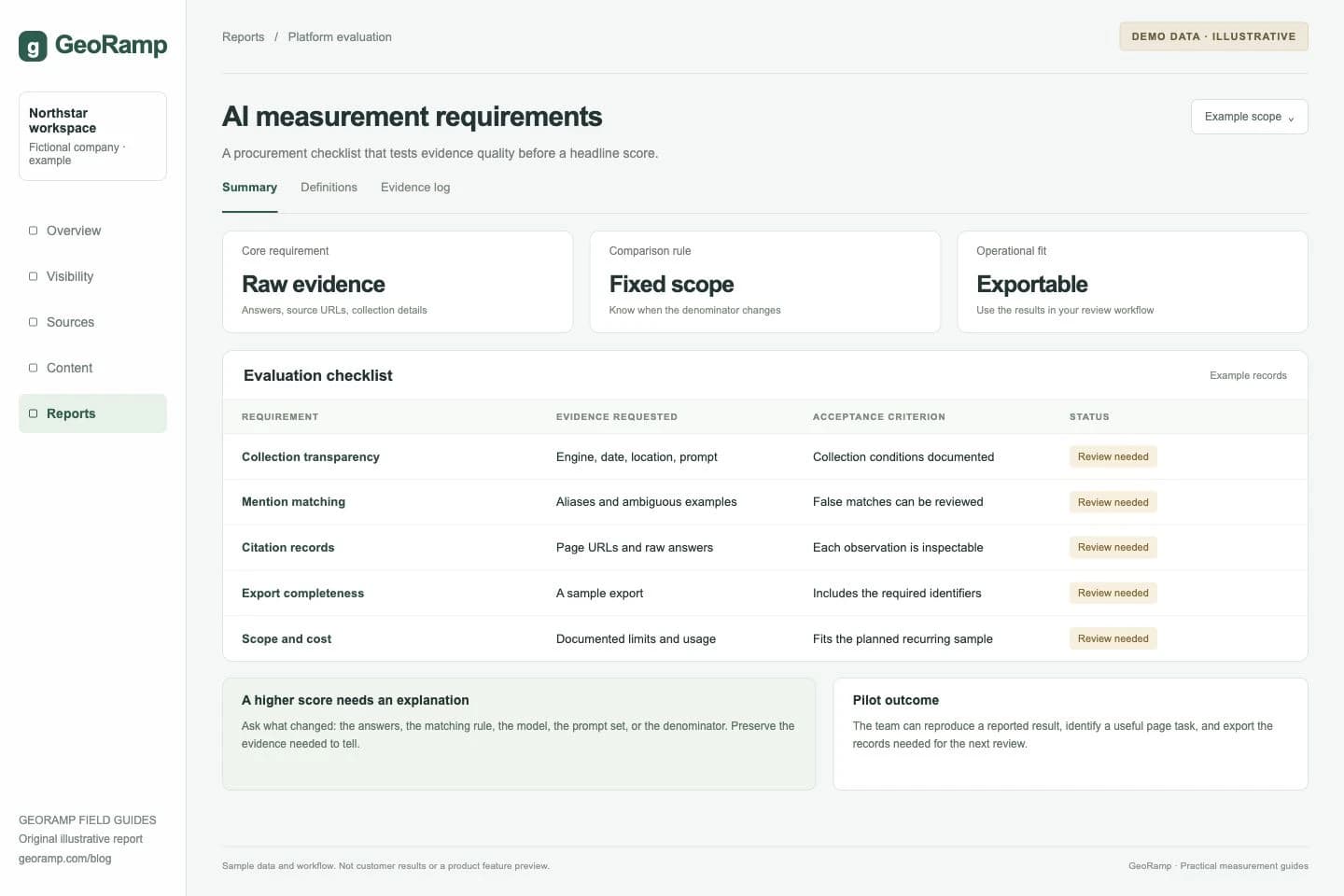
Illustrative report with fictional data and workflow examples. This is not a customer result or a preview of a specific product screen.
The illustrative scorecard evaluates requirements and evidence. It does not rank real vendors or claim tested superiority for GeoRamp.
Inspect a complete measurement path
Give the vendor one prompt and ask to follow it through collection, parsing, metric calculation, dashboard display, and export. Confirm how brand aliases, repeated links, citations to subdomains, and failed responses are handled.
Ask whether an “appearance” counts responses containing the brand or all mentions within responses. Ask whether “citation share” divides by sampled answers or by citation events. These definitions can change the interpretation of every chart.
Check what happens when a prompt is edited or a platform changes its interface. The system should preserve enough history to explain a break in the series.
Assess operating fit
Have the people who will review answers and create page tasks use the trial. Measure whether they can find evidence, correct a classification, compare periods, and share a useful action with the content team.
If several brands or teams will use the system, test workspace boundaries, roles, review processes, and export ownership. Confirm retention and deletion behavior through the vendor's current terms and product documentation.
Do not use hypothetical future features as if they were demonstrated capabilities. Keep roadmap statements in a separate field.
Compare the cost of the same workload
Estimate prompts multiplied by platforms and repeat observations, then include seats, history, exports, and any API access you require. A low entry price can be irrelevant when the pilot needs a different plan.
Set a pilot duration and acceptance criteria before paying for a large rollout. Criteria might include successful evidence export, an explainable metric, and the ability to generate useful page tasks. A promised citation increase is not an appropriate software acceptance test when the vendor does not control the answer system.
Make the recommendation inspectable
Summarize essential requirements, demonstrated strengths, unresolved gaps, expected cost, and the owner of the next step. Link to the trial evidence.
For product examples, use the AI SEO tools comparison. For a less formal trial workflow, see the AI visibility product guide. Keep your own selection tied to the work the team actually needs to perform.


