
AI Overview Tracker: Queries, Citations, and the Right Denominator
Build an AI Overview tracking report that separates trigger rate, citation rate, source URLs, and changes in your fixed query sample.


Practical articles for teams trying to understand how brands get cited in ChatGPT, Perplexity, and Google AI Overviews.
Build an AI Overview tracking report that separates trigger rate, citation rate, source URLs, and changes in your fixed query sample.

Inspect HTTP responses, rendered HTML, access rules, and extracted text without confusing a local parser with ChatGPT’s internal view.

Combine organic rankings, SERP features, AI Overview observations, and assistant citations without mixing their metrics.

Choose AI search platforms using buyer evidence, comparable usage definitions, referral data, and a documented prompt pilot.
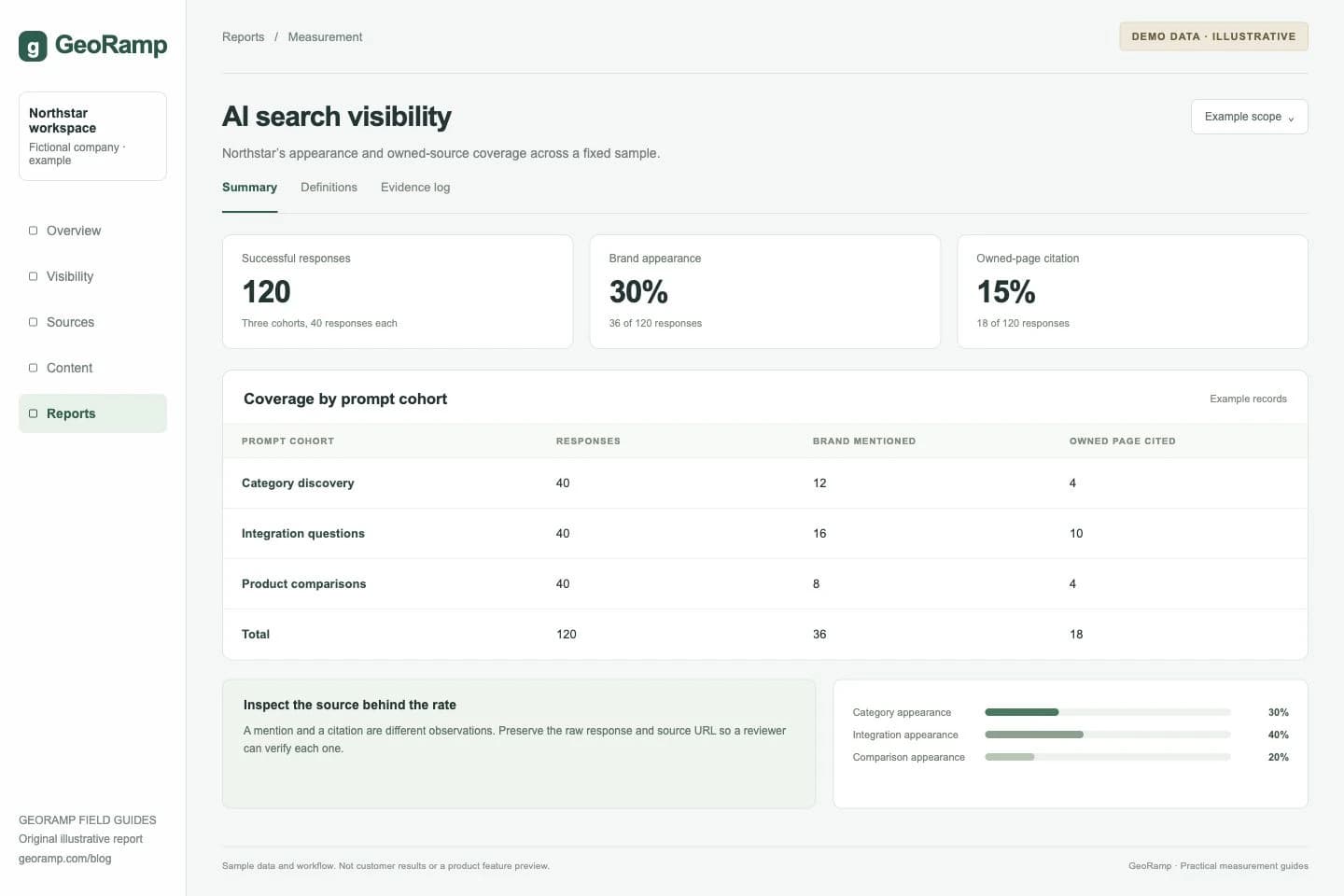
Build an AI visibility baseline using a fixed prompt set, distinct mention and citation metrics, and page-level evidence.
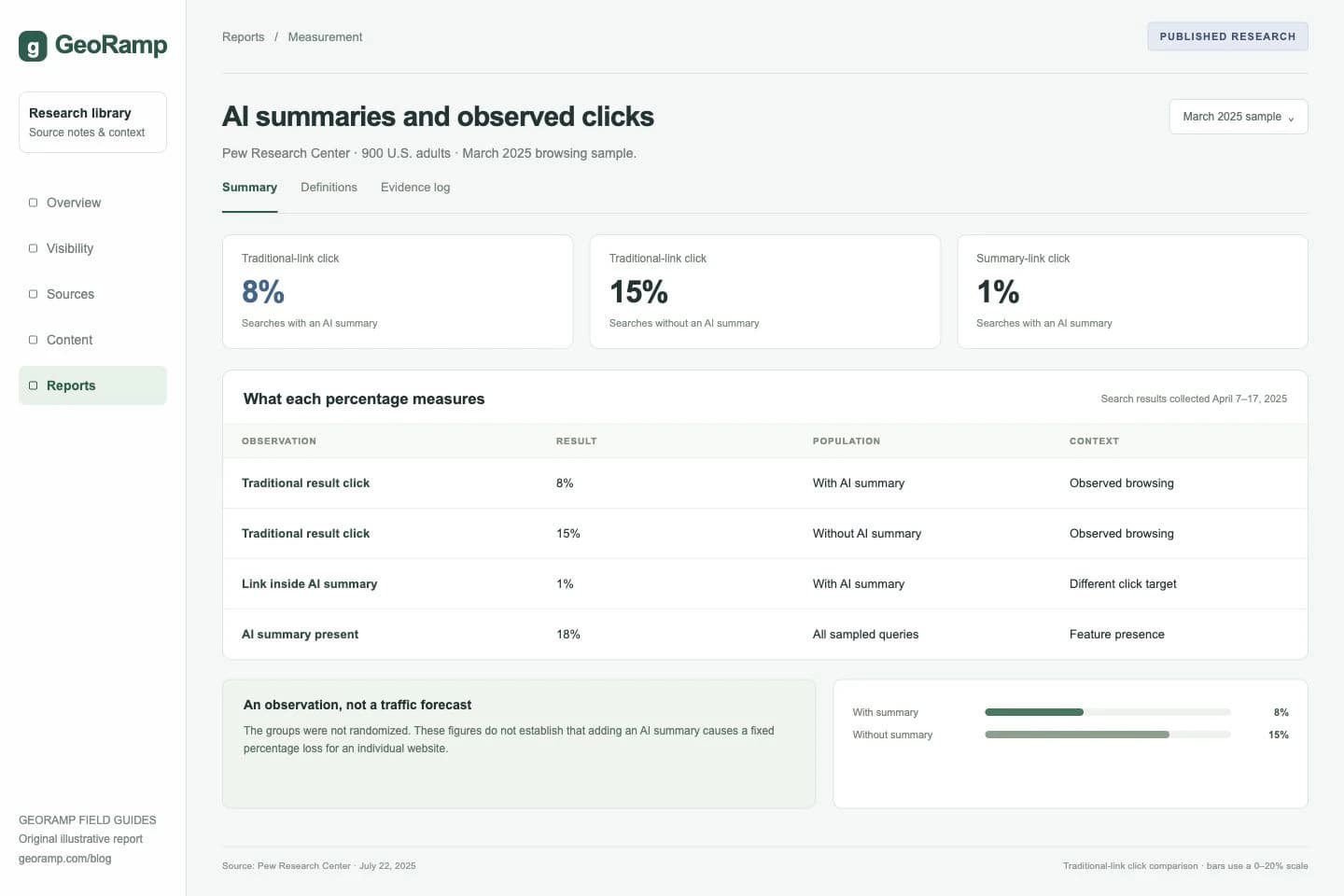
A sourced guide to Google AI summary click behavior and GEO research, with dates, denominators, and limits on what the numbers prove.

A practical operating plan for AI search visibility, from prompt baselines and technical fixes to content ownership and review decisions.

Compare AI search terminology, define the work each label refers to, and write a brief that stays useful when the vocabulary changes.

Compare organic search and AI answer visibility, then build a shared workflow for technical access, useful content, and measurement.

A practical AEO workflow for selecting questions, writing supported answers, checking extraction, and measuring citations separately from mentions.

Build a demand generation program around buying problems, useful proof, distribution, sales follow-up, and a small AI search measurement pilot.

Ten checks for clearer product information, public-page access, comparisons, source evidence, and measurable AI search visibility.
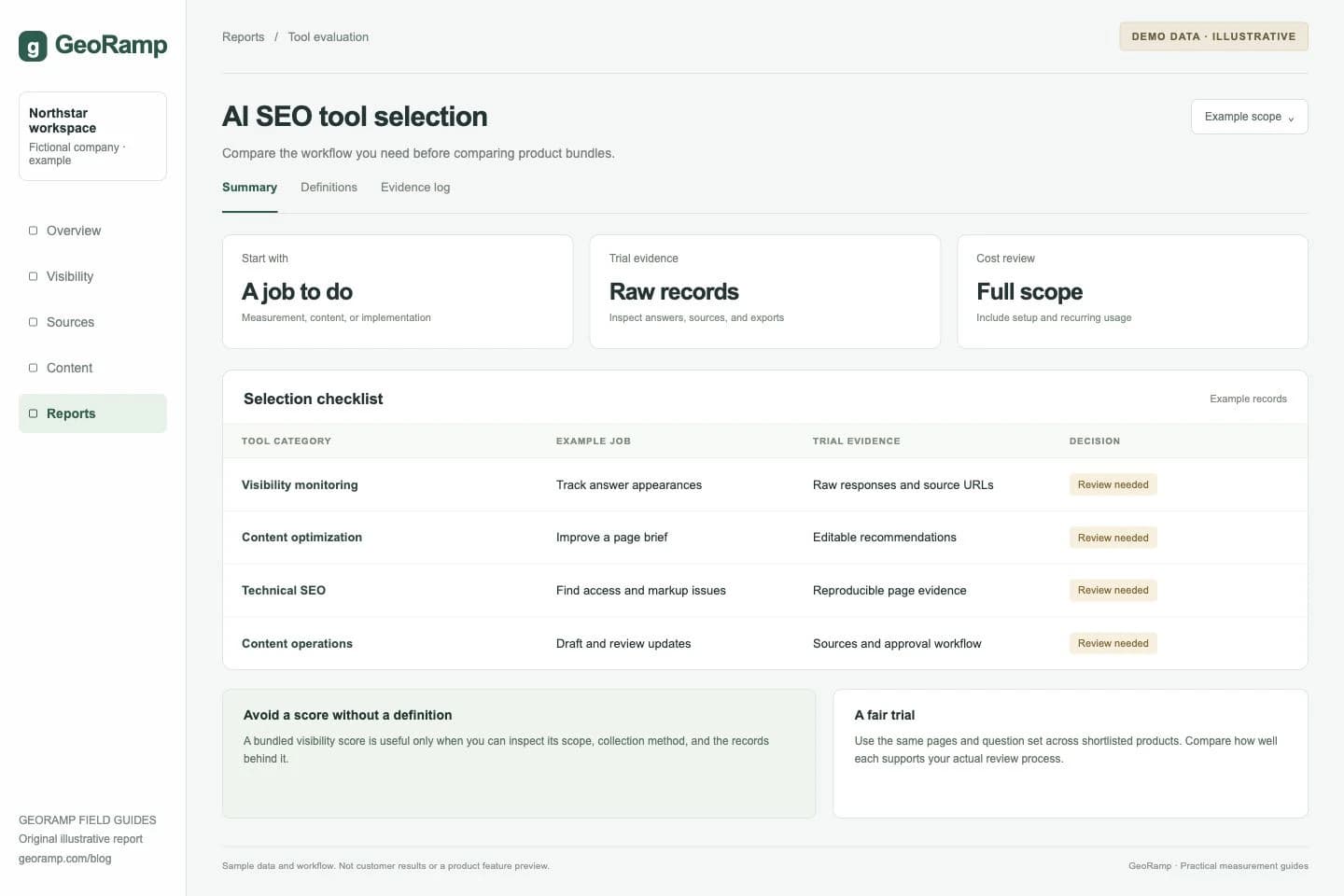
Compare AI visibility, content, research, and structured-data tools, with official sources and a practical pilot checklist.
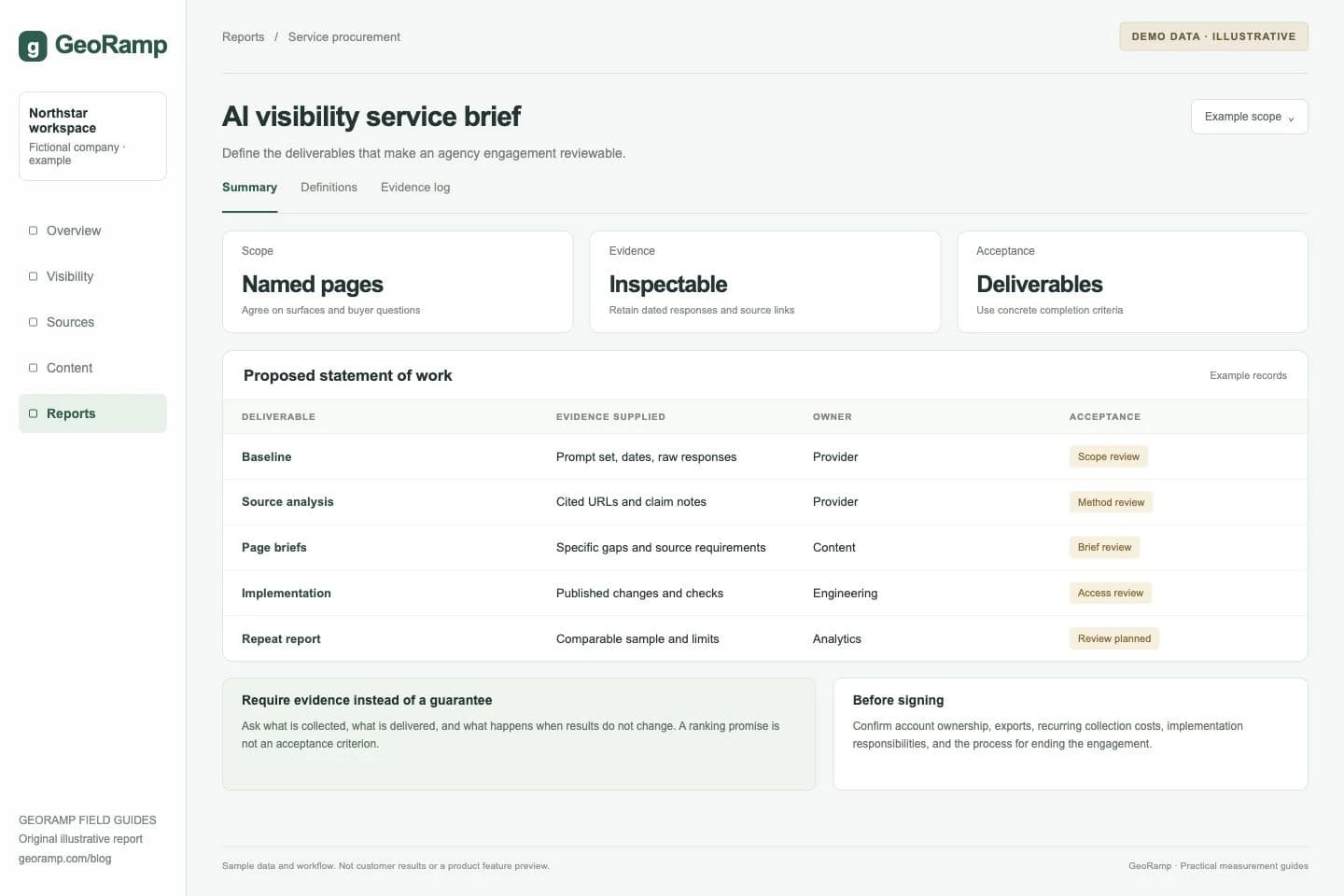
Compare agency, freelancer, and in-house delivery using a concrete scope, sample outputs, evidence standards, and an exit plan.
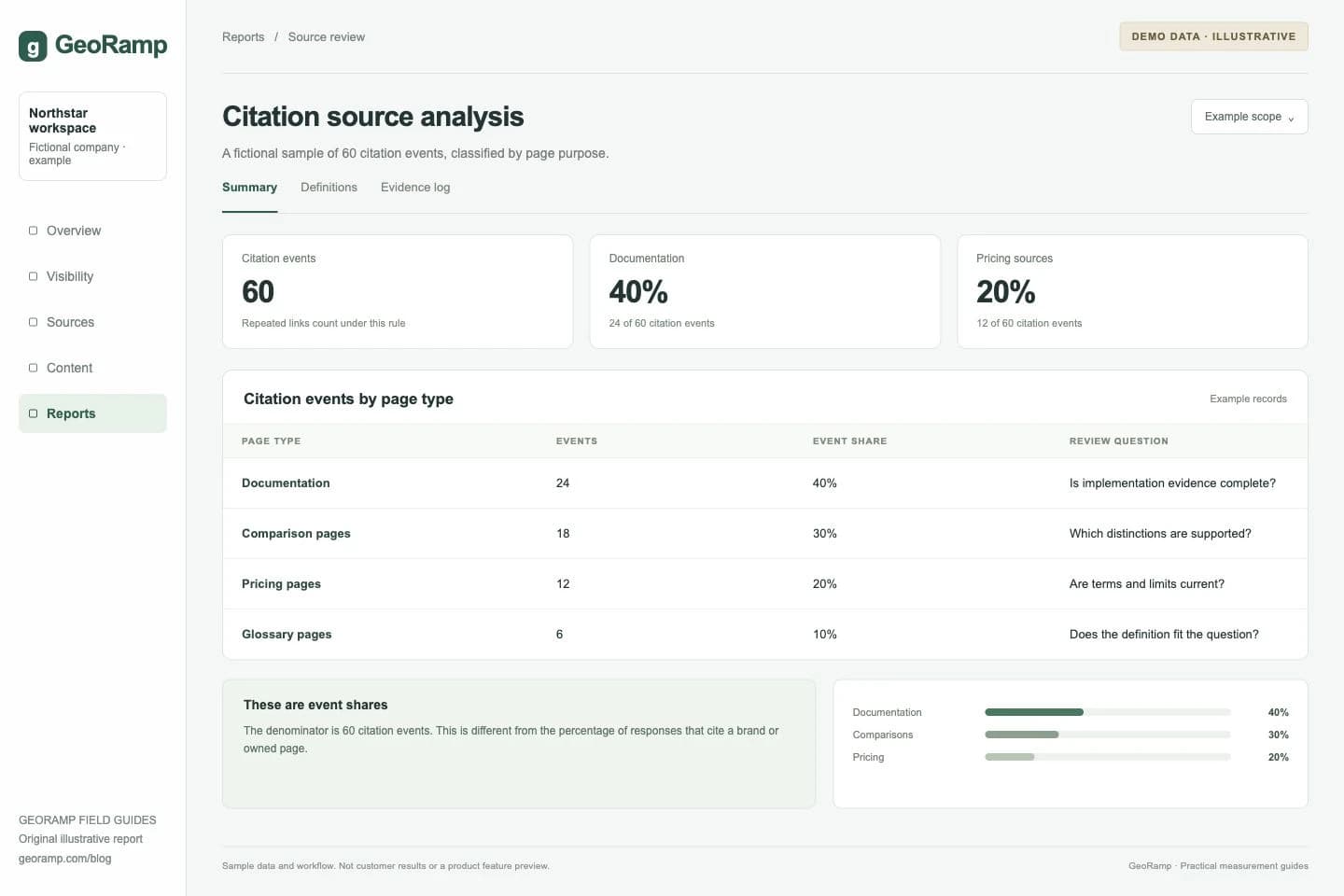
Audit AI citation data at answer, page, and platform level, then use the evidence to prioritize specific content work.

Use ChatGPT for question clustering, briefs, drafts, and quality checks while keeping facts, publishing decisions, and measurement verifiable.
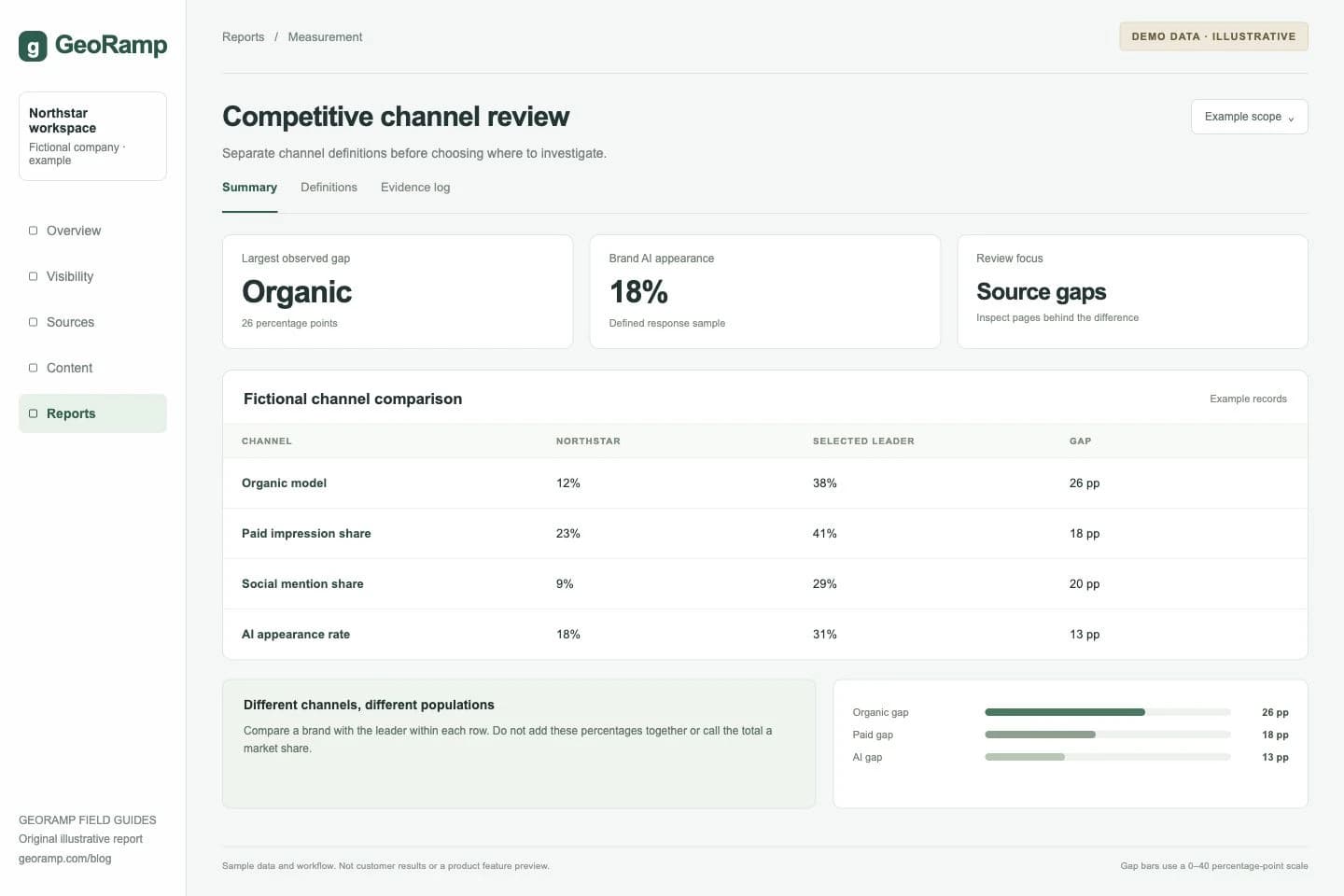
Compare competitors by buyer task, channel, evidence, and business relevance, then turn the findings into a focused marketing backlog.
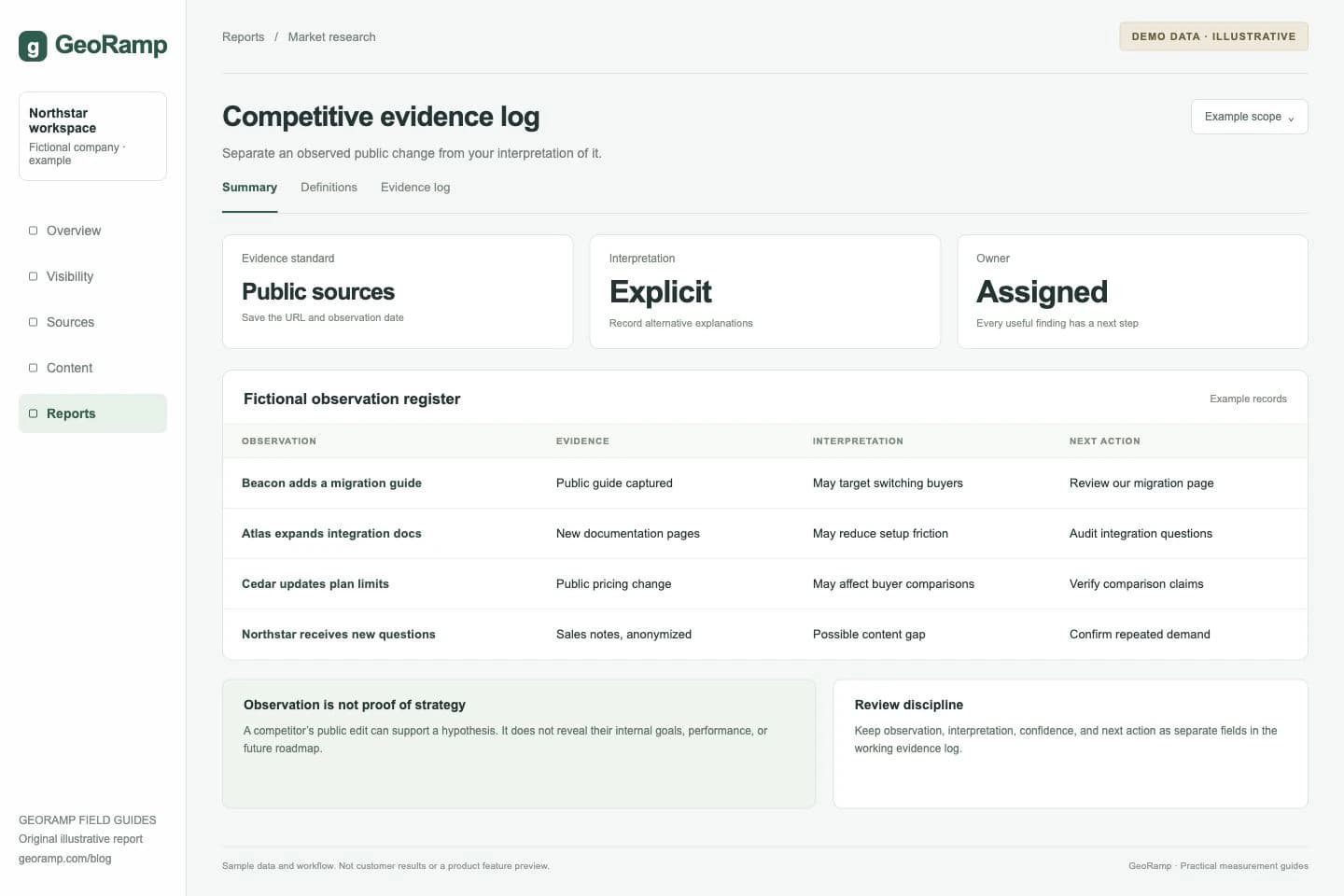
Create a competitive intelligence process with dated sources, confidence labels, useful alerts, and a clear owner for each decision.
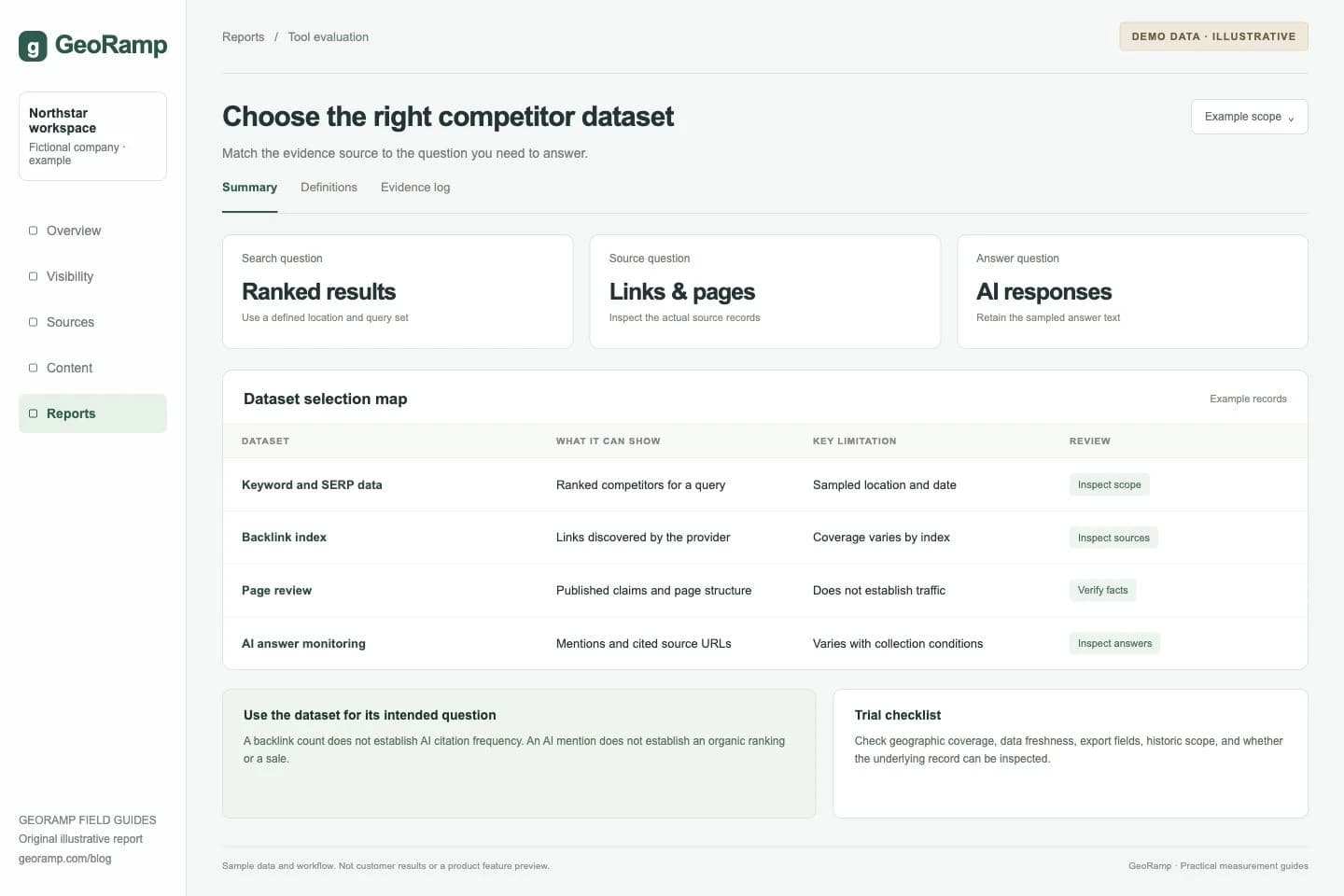
Choose SEO competitor research tools by keyword, link, content, and AI-answer datasets, then validate their findings against actual pages.
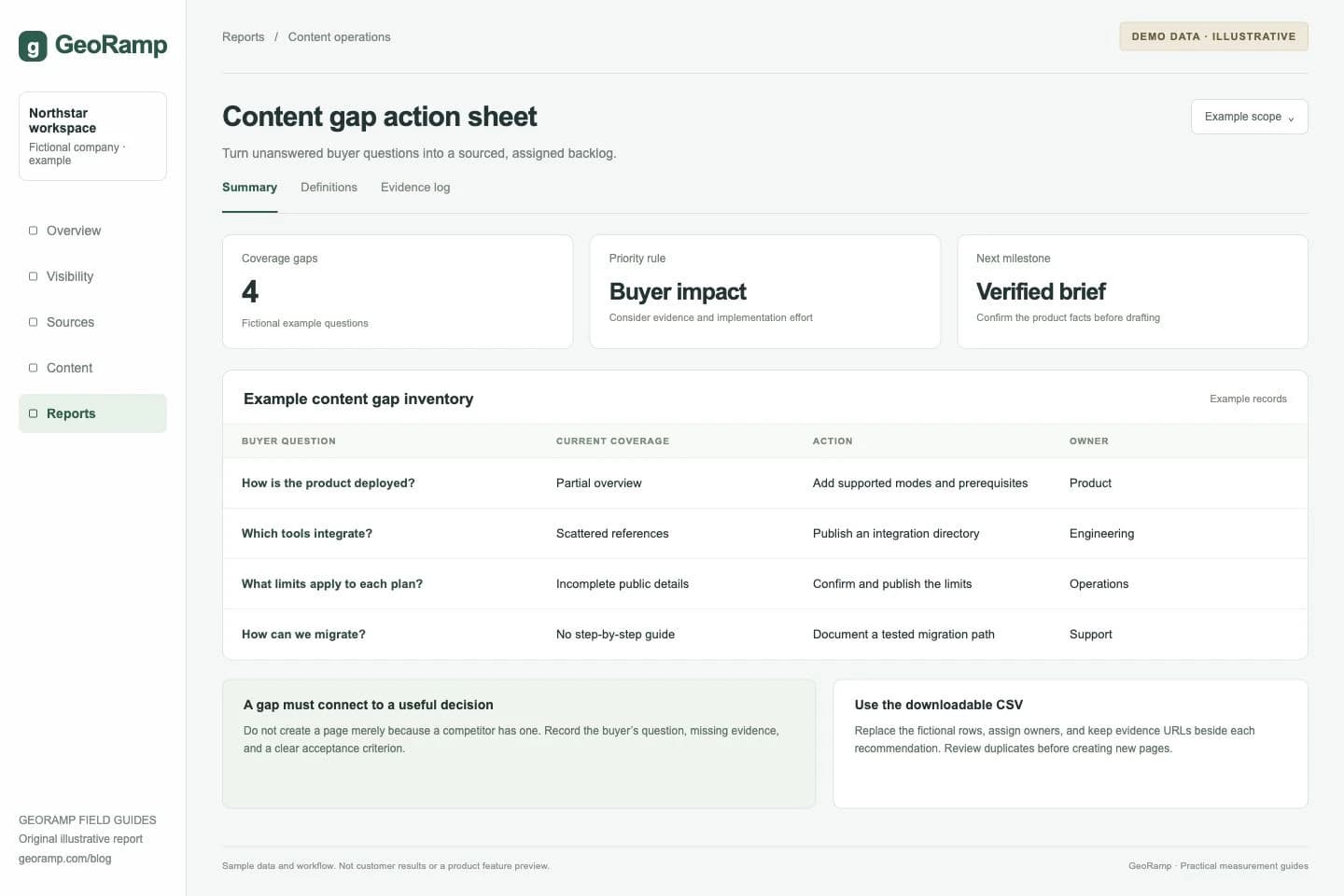
Download a CSV template for documenting buyer questions, competitor coverage, source evidence, existing pages, priorities, and next actions.

Understand GEO, the limits of its research, and a practical workflow for improving source material and measuring generated-answer visibility.

Diagnose traffic gaps, improve useful pages, plan distribution, and evaluate organic, partner, paid, and assistant referrals by visitor quality.

Find relevant snippet opportunities, structure useful answers, and track featured snippets separately from AI Overviews.
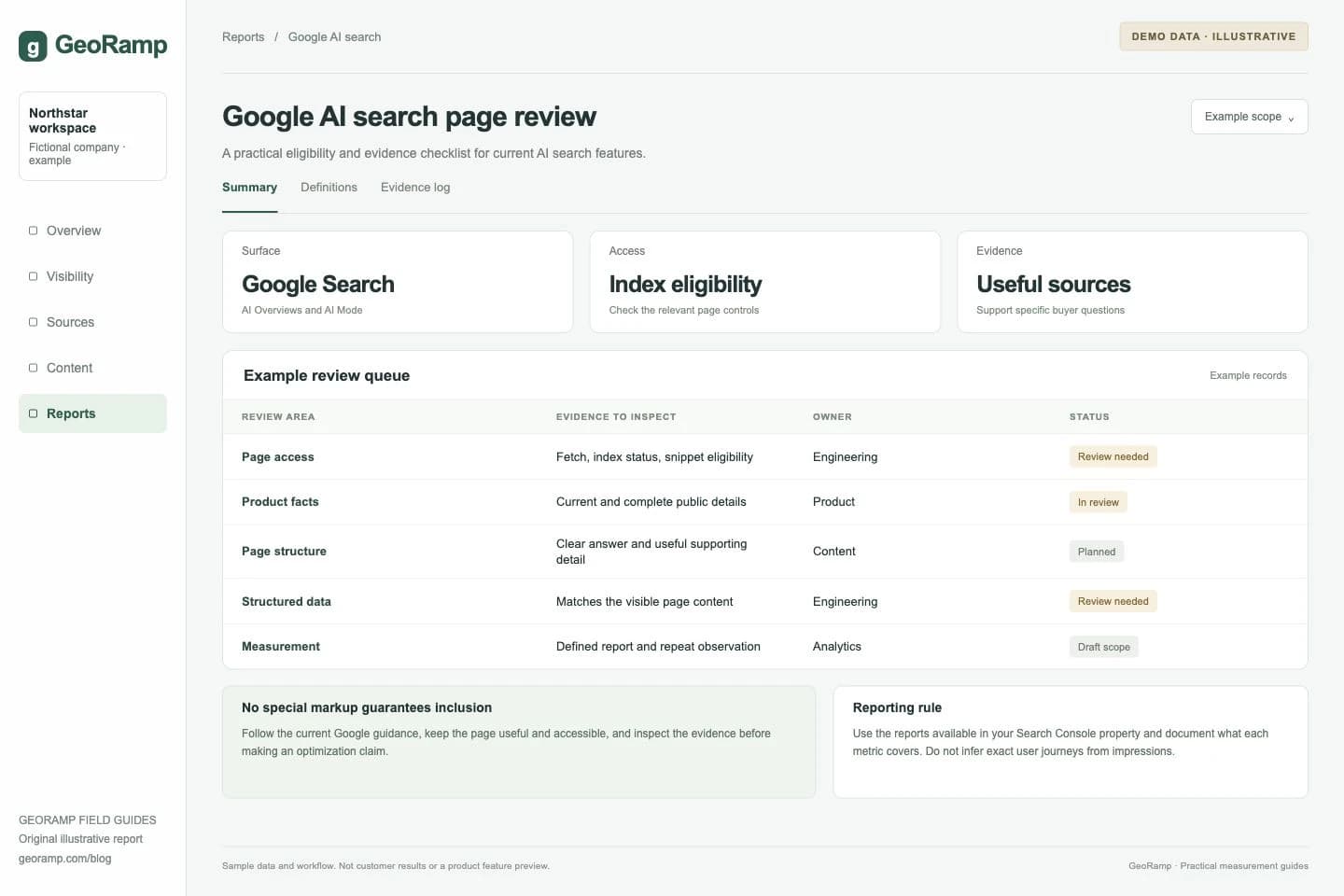
A practical guide to AI Overview eligibility, source quality, content improvements, and reporting, without unsupported ranking guarantees.
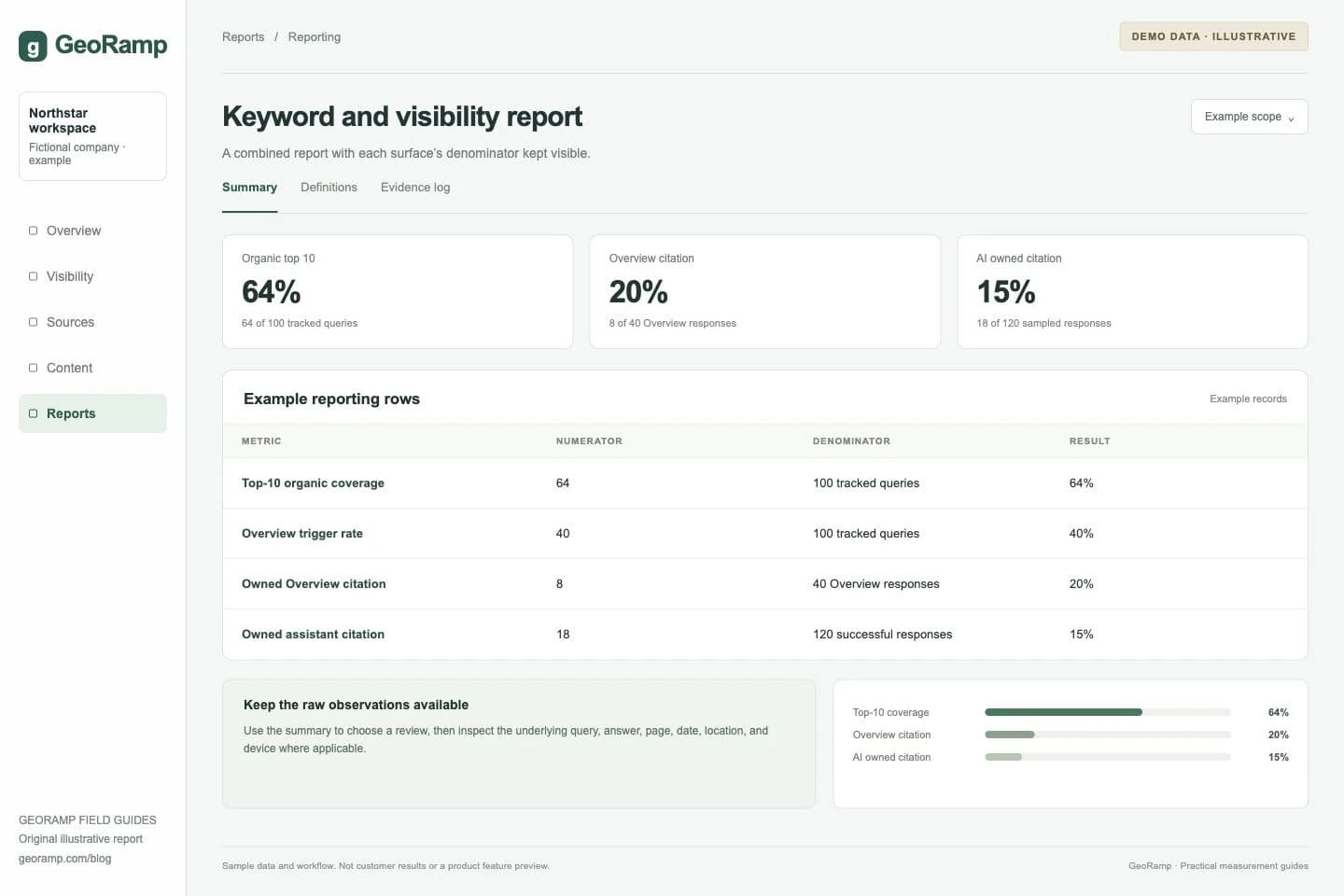
Build a compact report that separates organic positions, search features, AI citations, sample changes, and the next page decision.
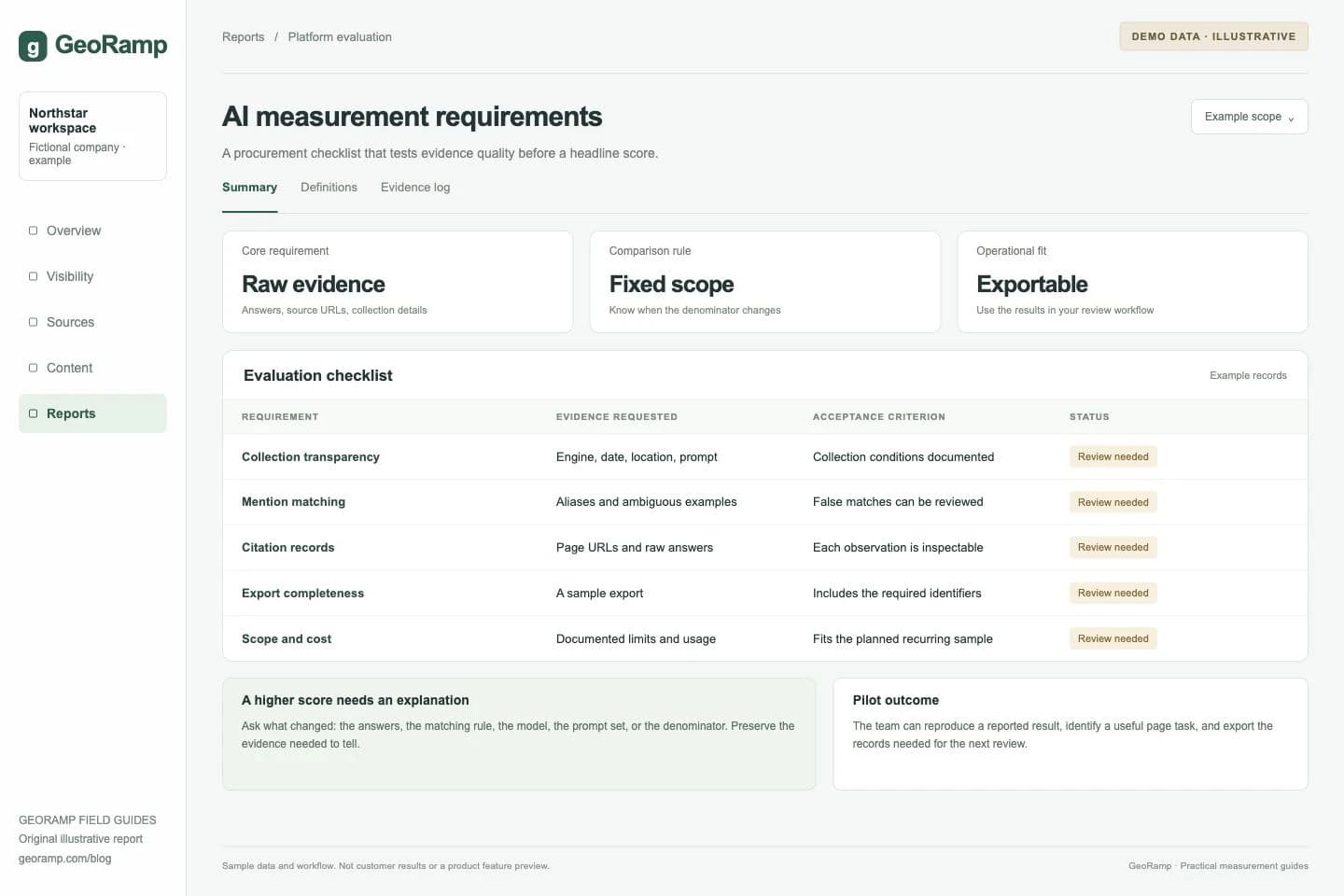
Evaluate AI visibility platforms using inspectable evidence, documented denominators, collection methods, exports, and operating fit.

Understand the difference between a model and a search-enabled assistant, then diagnose source access, answer quality, and citation evidence.
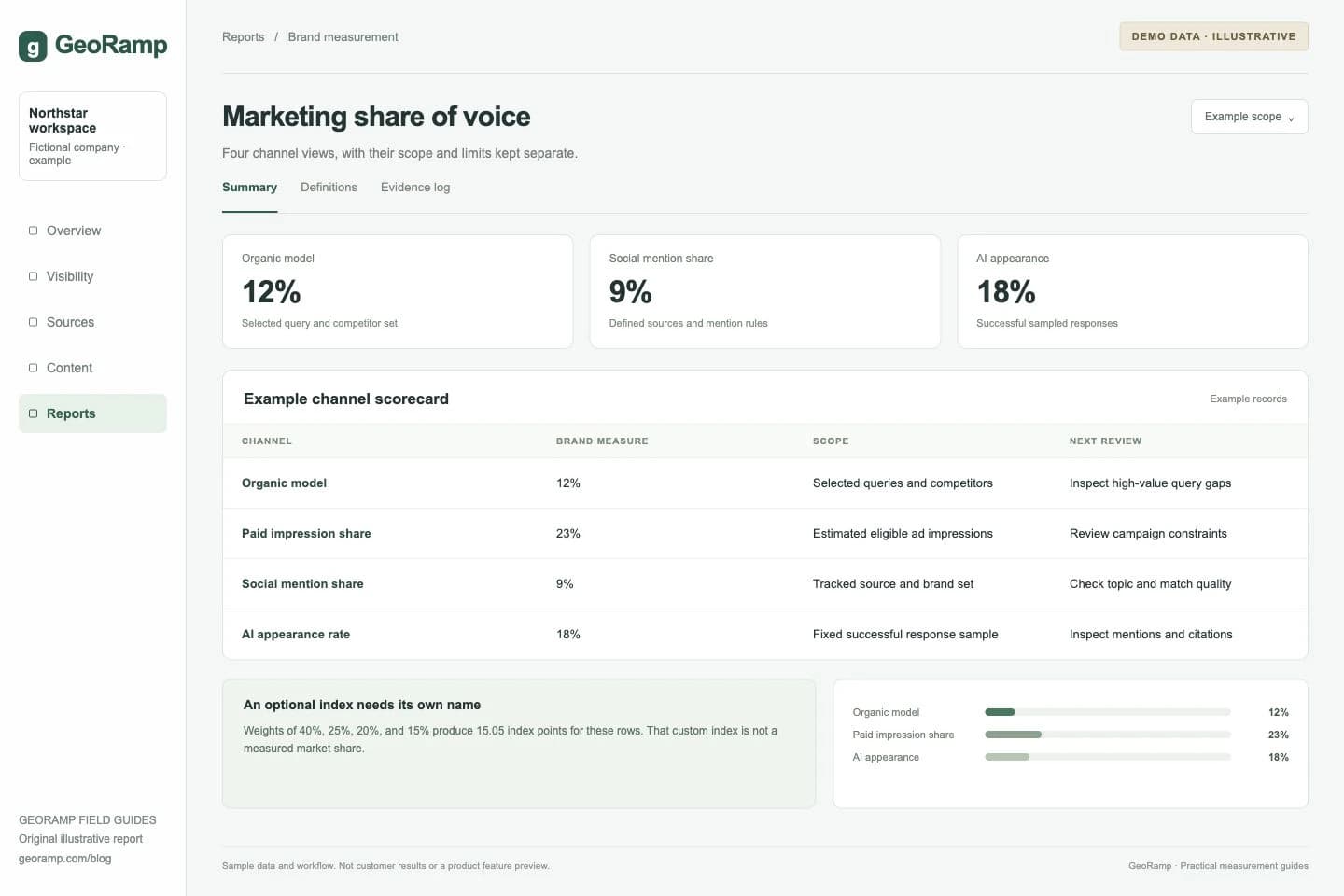
Report organic, paid, social, PR, and AI visibility together while preserving each metric’s denominator and avoiding misleading composite shares.
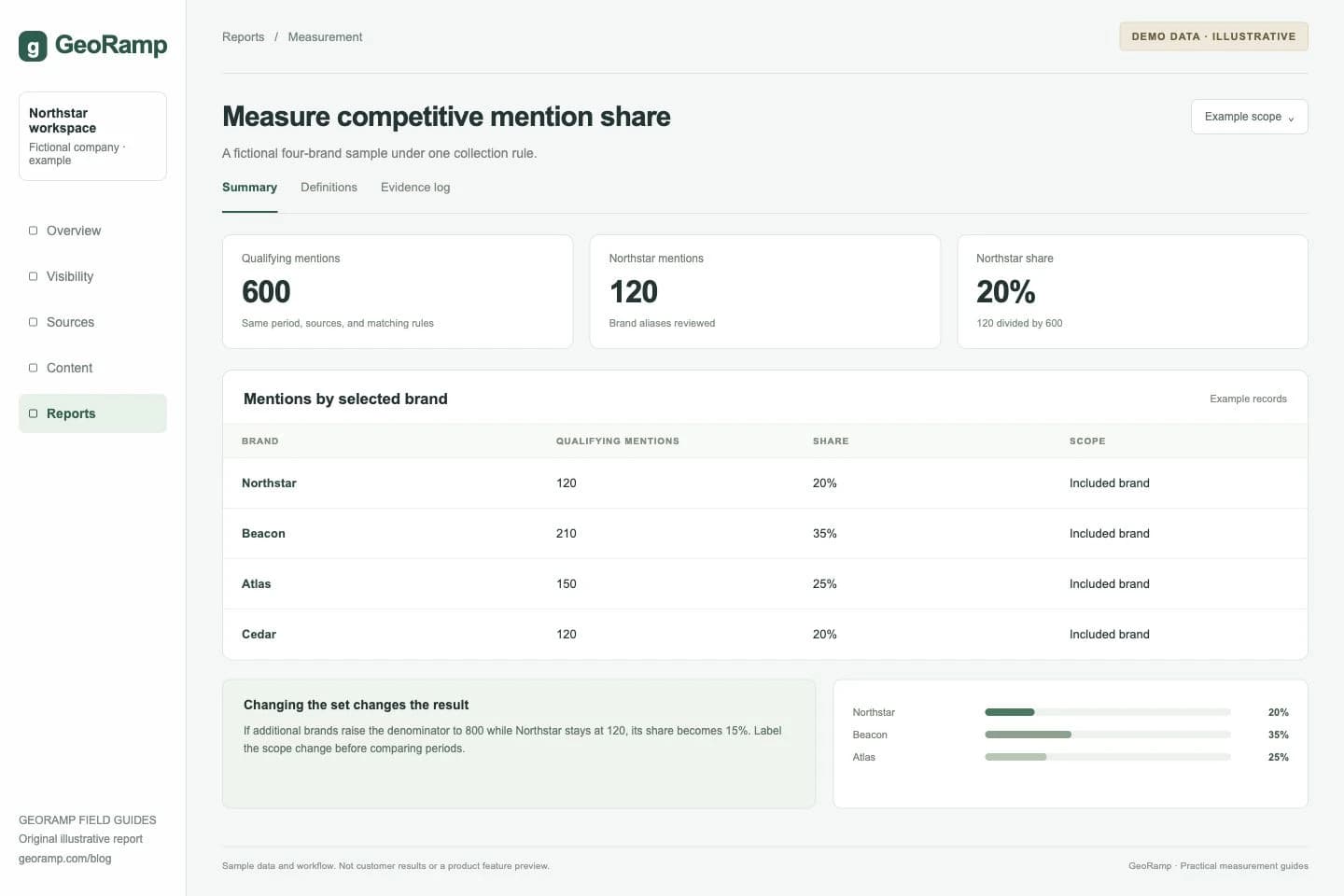
Design a share-of-voice measurement process with a stable competitor set, consistent matching rules, clean data, and comparable reporting periods.
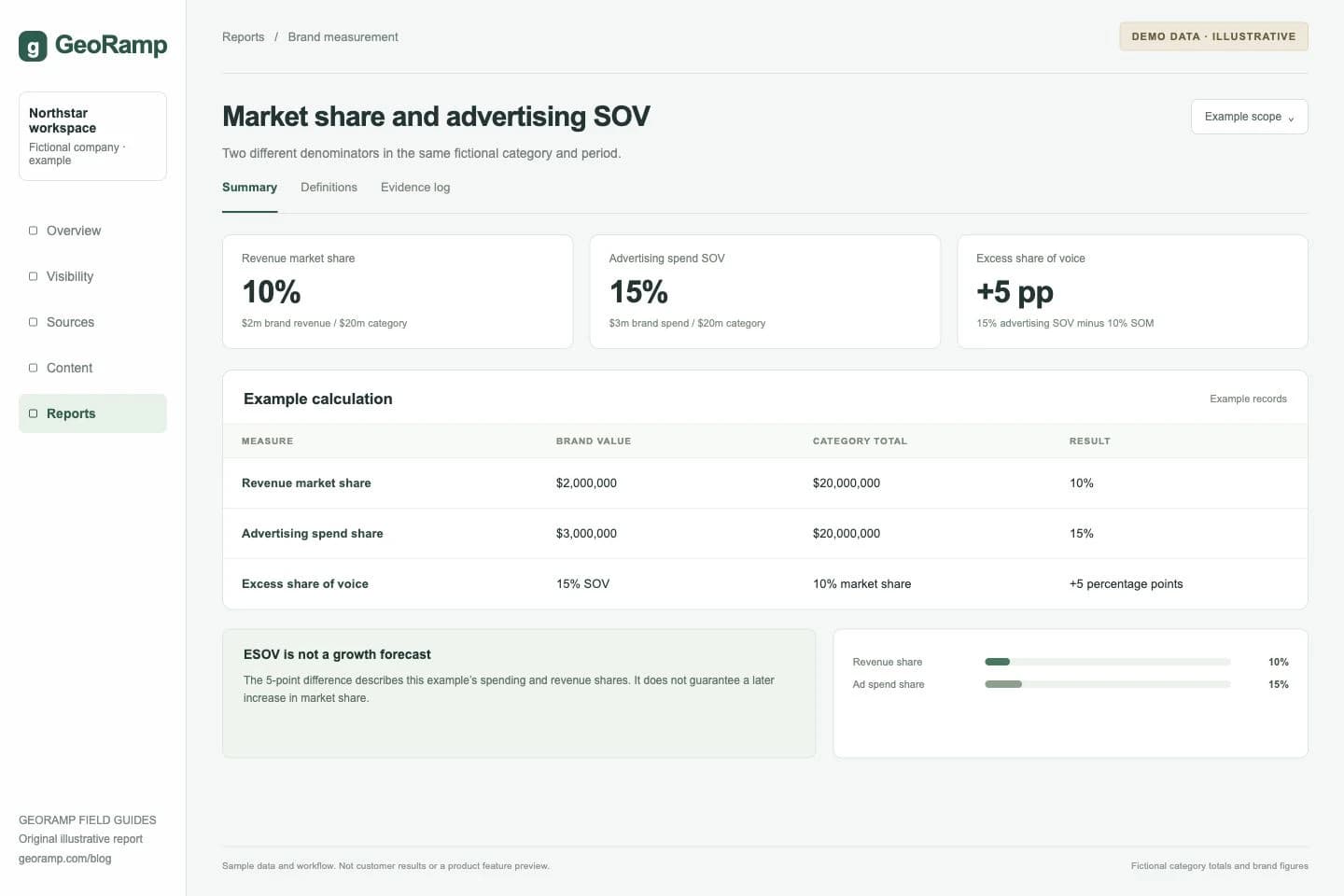
Calculate market share and share of voice, understand excess share of voice, and avoid treating a visibility gap as a guaranteed growth forecast.
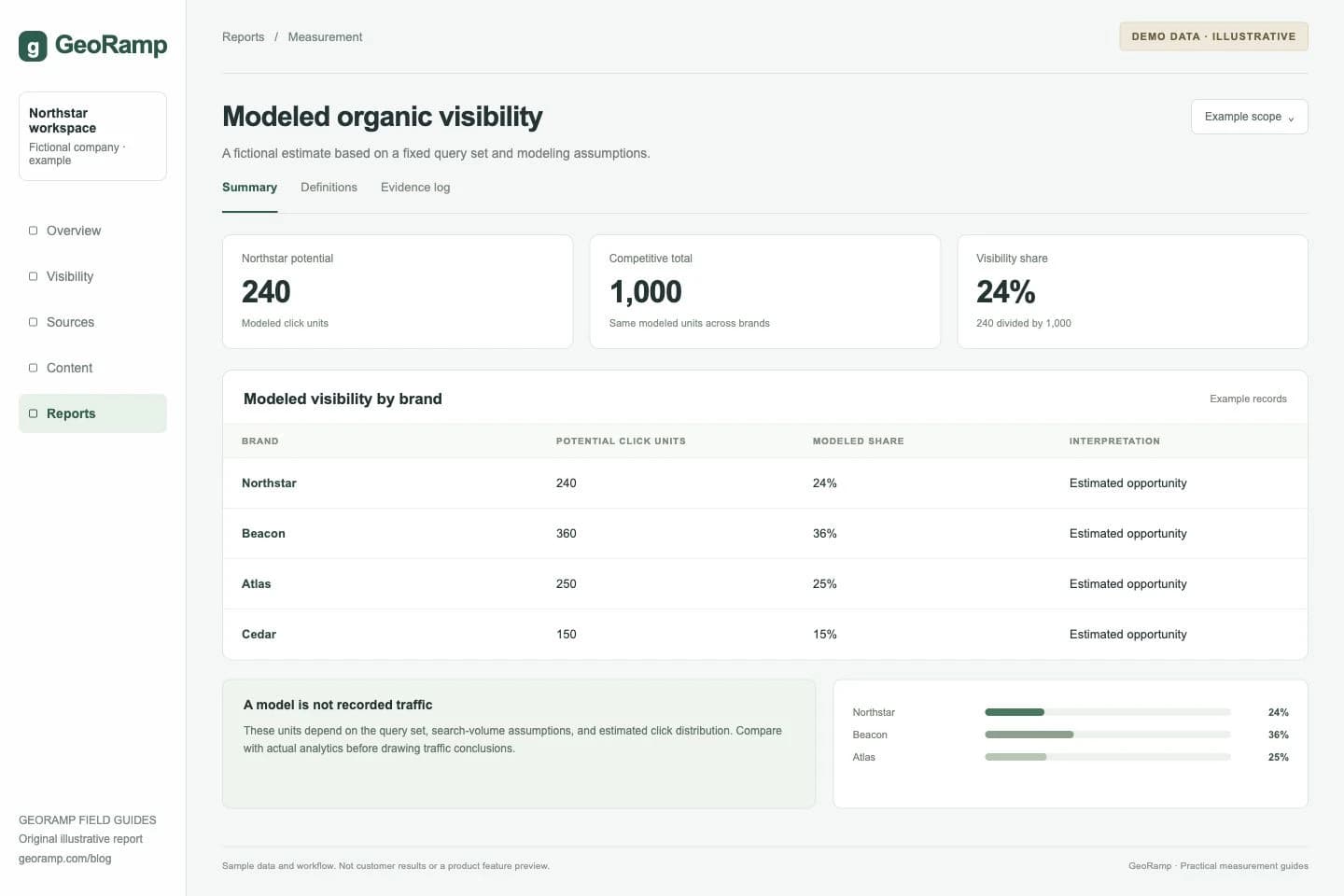
Measure visibility on a defined surface, distinguish modeled organic share from answer appearance rates, and document any composite index.
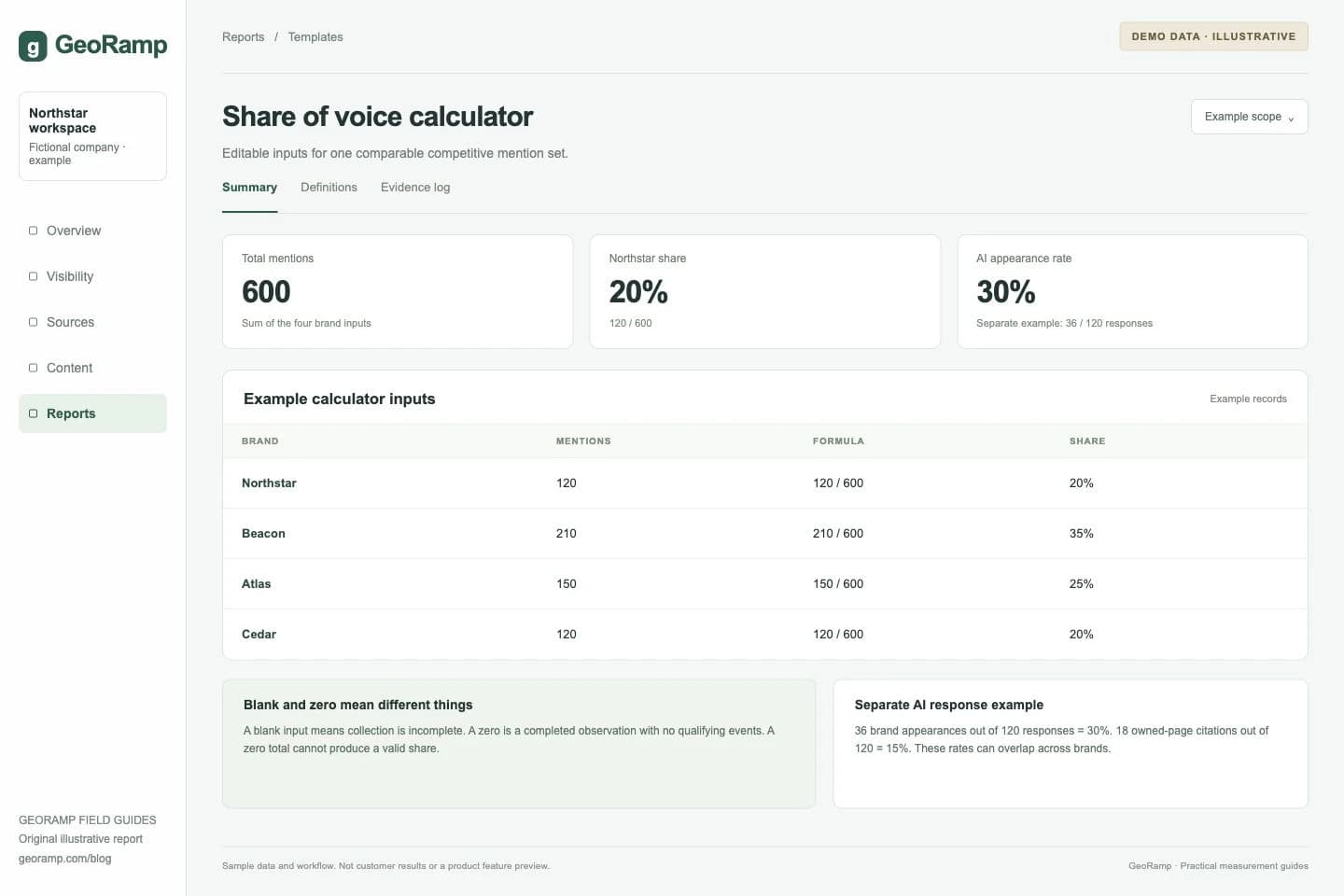
Download a formula-based SOV calculator, define a comparable competitive set, and keep AI appearance rates separate from additive mention shares.
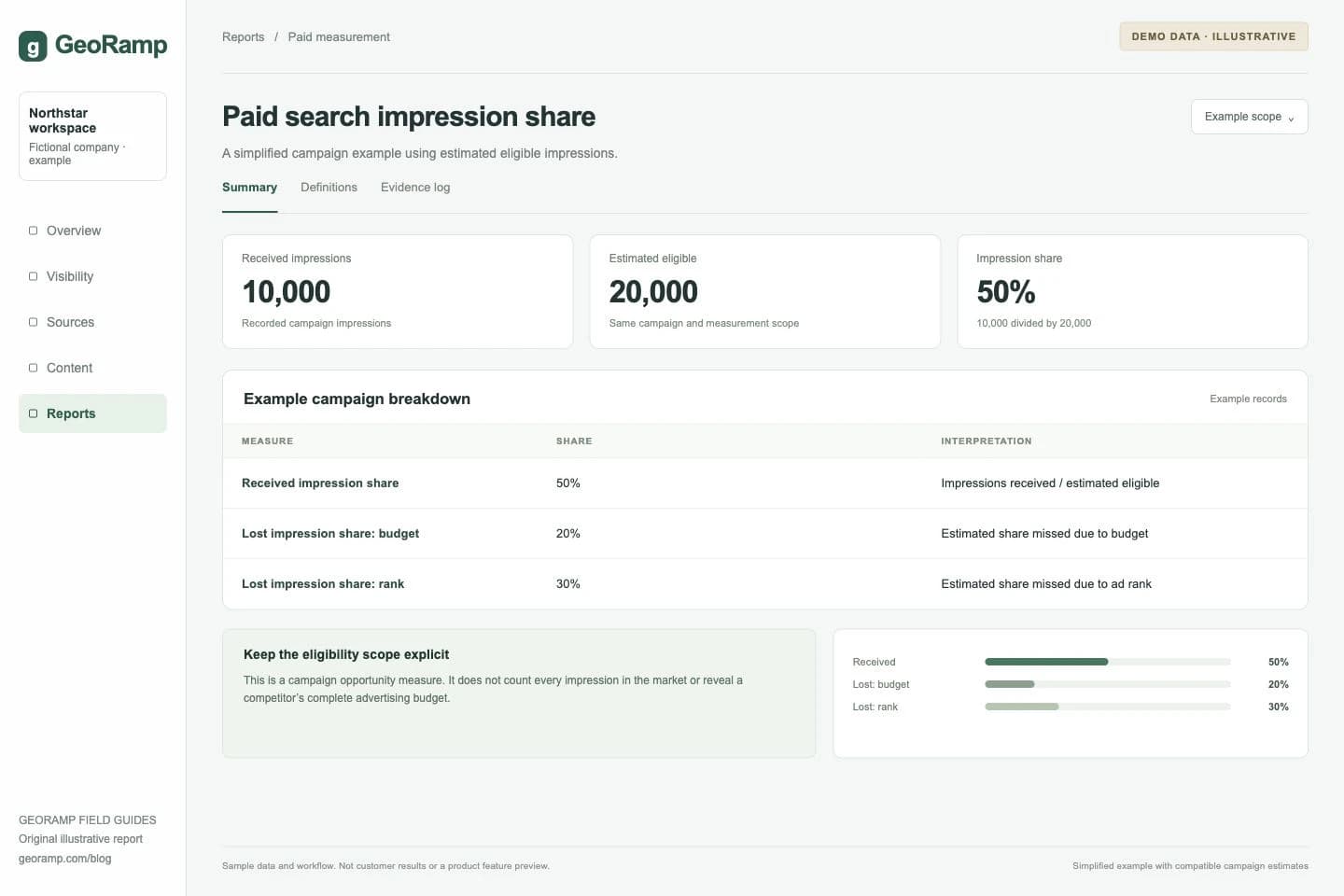
Interpret paid impression share, eligible auctions, budget and rank constraints, and the difference between ad presence and category-wide share.
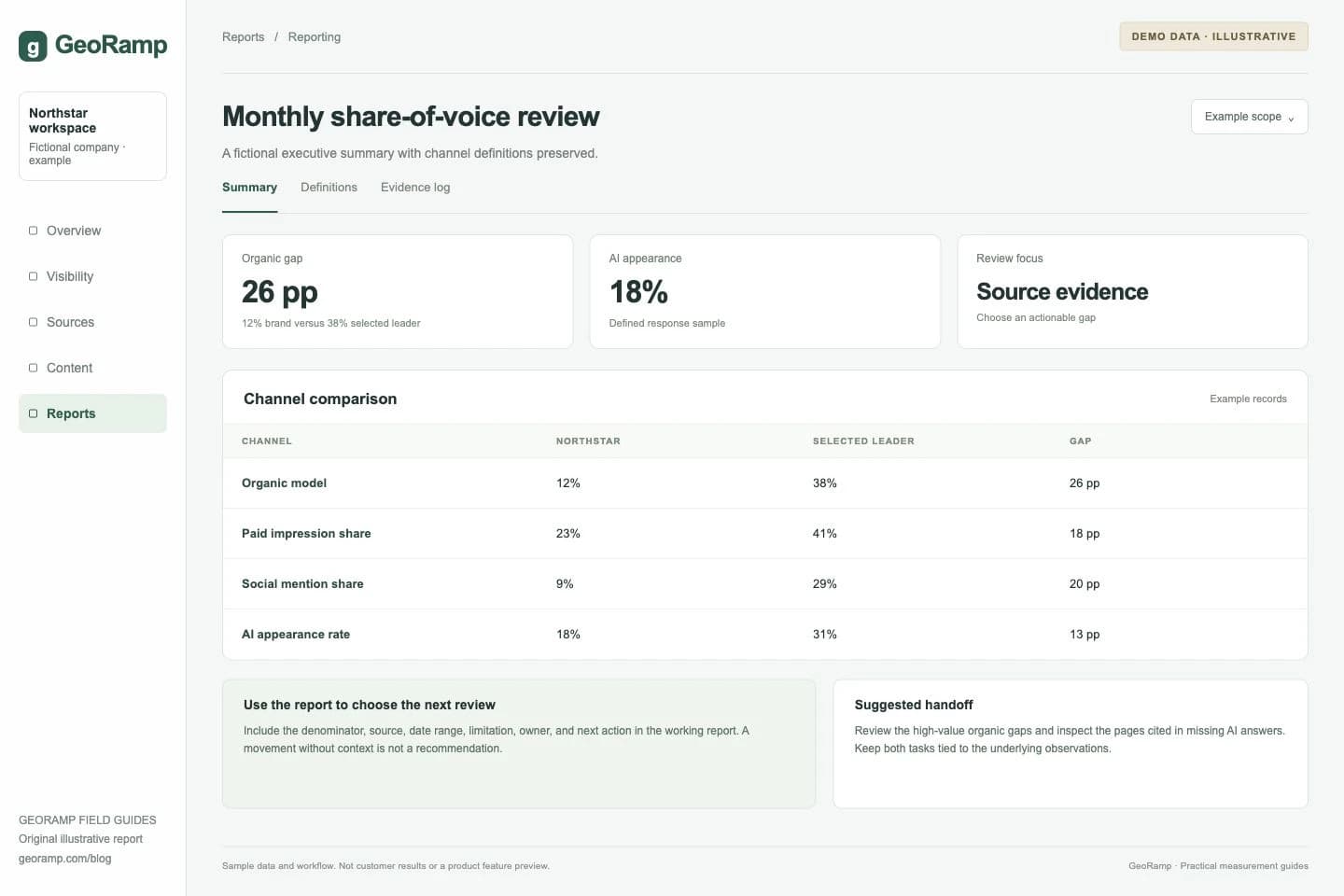
Download a compact SOV report template with metric definitions, competitor gaps, percentage-point changes, evidence, and action ownership.
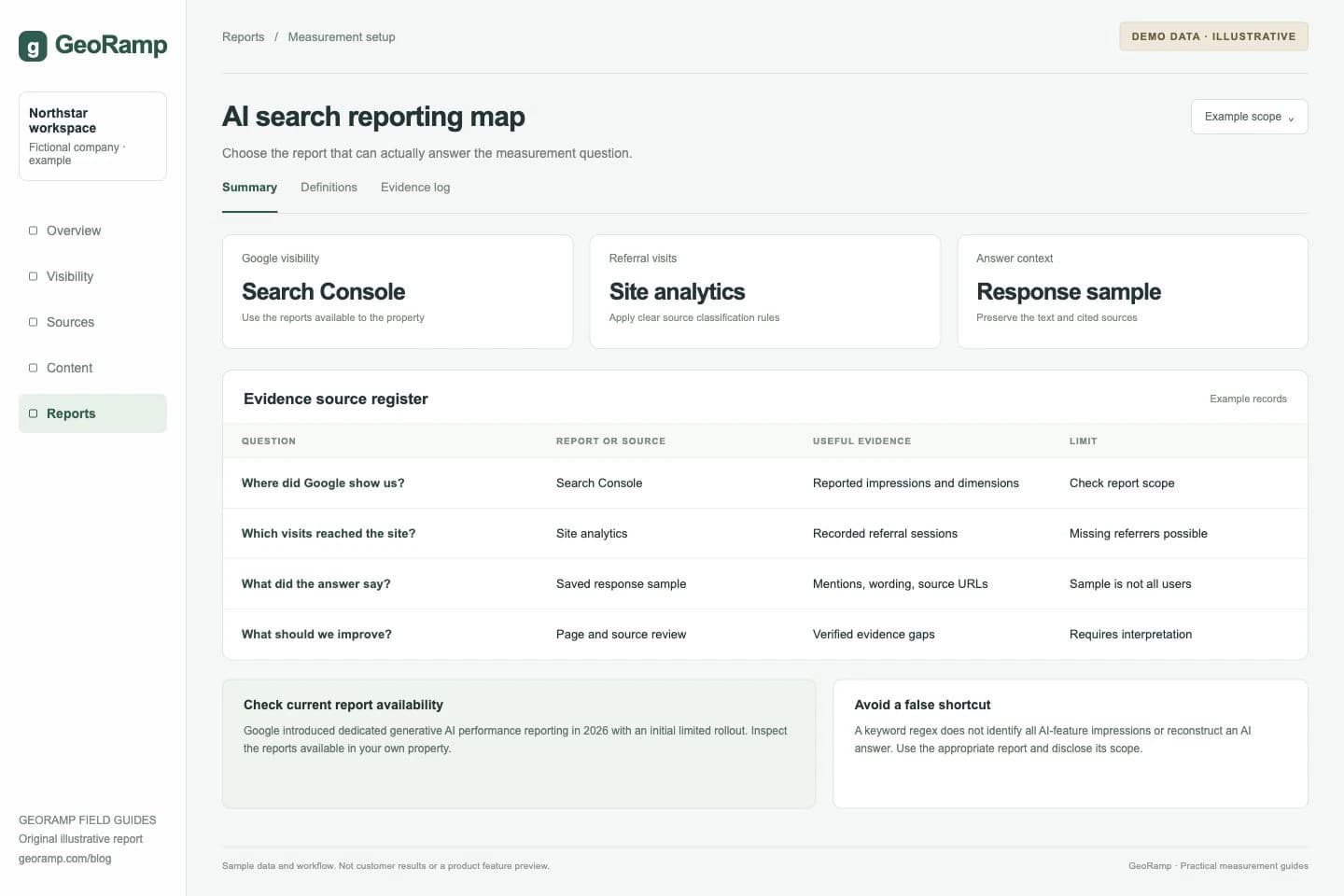
Use Google’s generative AI impressions report where available, understand what query filters cannot prove, and separate external-assistant referrals.
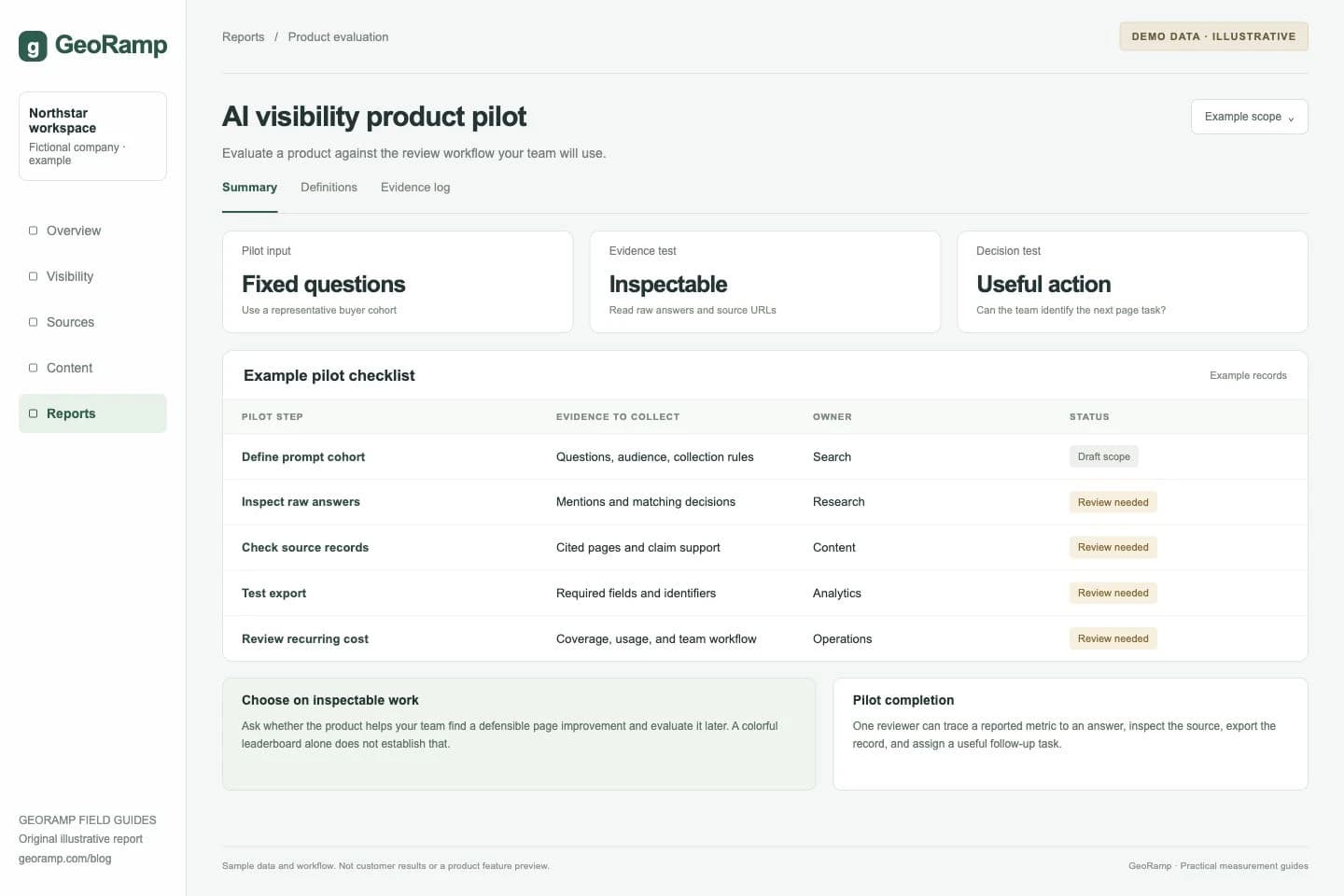
Select an AI visibility product by running a bounded trial with your buyer questions, source evidence, workflow needs, and expected collection costs.

AI citations link an assistant's answer to a supporting source. Learn how they differ from brand mentions, what to measure, and how SaaS teams can improve source content.

Calculate share of voice with clear denominators, channel-specific formulas, worked examples, and the distinction between competitive AI share and answer appearance rate.

A practical process for optimizing content for AI search: answer buyer questions, verify evidence, preserve SEO foundations, and measure comparable results.

A practitioner's guide to AI search engine optimization in 2026. Learn how to earn citations in ChatGPT, Perplexity, and Google AI Overviews.

Learn how to rank in ChatGPT with this practical AI SEO playbook. Covers technical SEO, content chunking, backlinks, and differentiation for AI citations.