


More traffic is a poor target when the additional visitors cannot use your product. Start with the audience and action you want to support, then identify where relevant people are failing to find or use the site.
A traffic plan should connect discovery, landing-page usefulness, and a meaningful next step. That makes it possible to distinguish a successful acquisition effort from a temporary increase in visits.
Establish a trustworthy baseline
Review sessions or users consistently, keeping the metric definition and attribution model visible. Segment by source, landing page, geography, device, and the action that matters to the business.
Check for tracking changes, internal traffic, bot activity, and broken events before explaining a large movement. A new consent implementation or duplicate page-view event can change a chart without changing audience demand.
Compare like-for-like periods and annotate releases or campaigns. If the business is seasonal, a comparison with the immediately preceding period may be misleading.
Find the specific acquisition gap
Low impressions on a useful topic suggest a discovery or relevance problem. Strong impressions with weak clicks call for inspection of the actual results and the page's presentation. Useful visits with poor next-step behavior call for a closer look at the landing page and offer.
Do not assume all three require more articles. A broken internal link, an unclear product fit statement, or an outdated integration guide may be the more valuable repair.
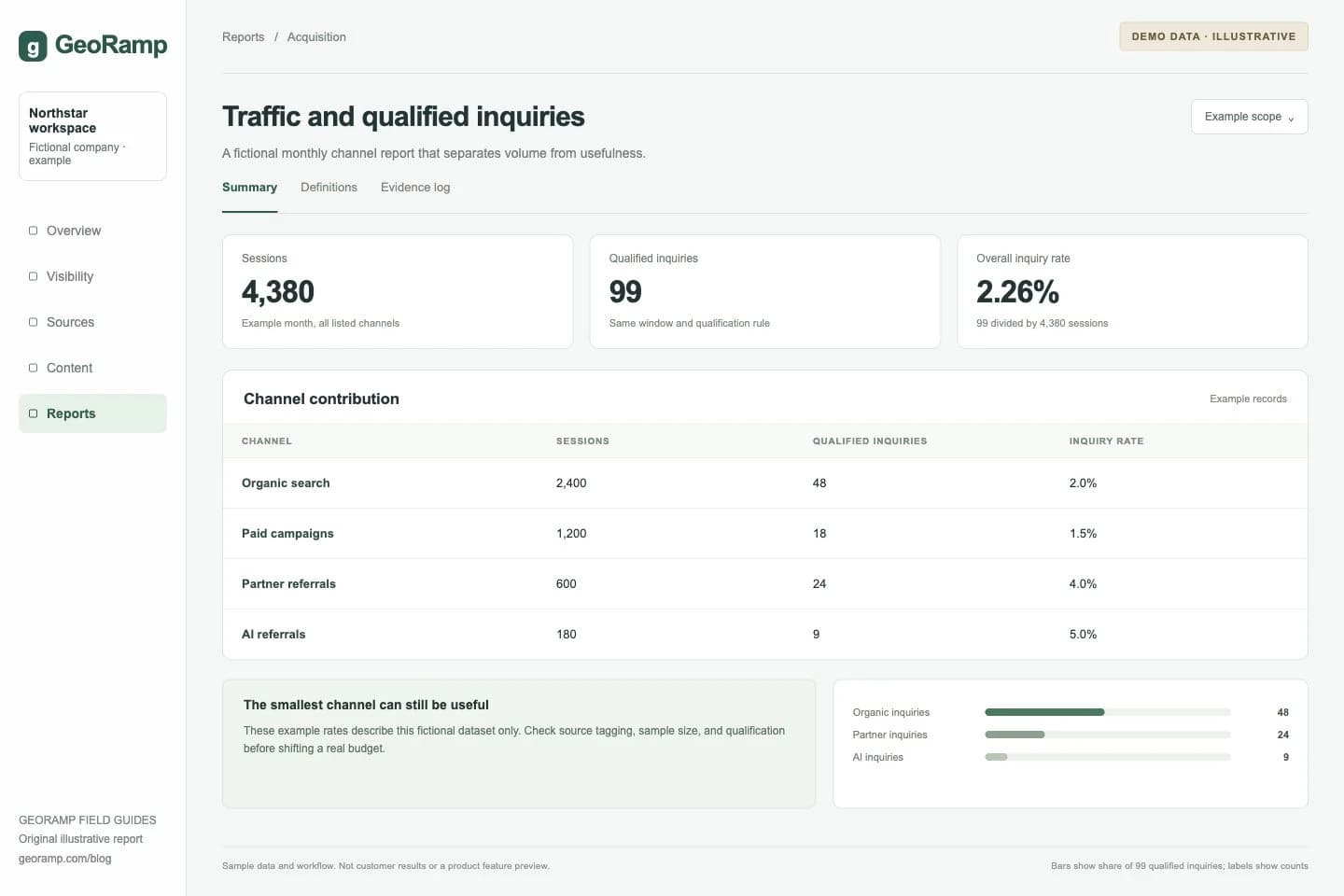
Illustrative report with fictional data and workflow examples. This is not a customer result or a preview of a specific product screen.
The example channel report keeps sessions and qualified inquiries side by side. Its fictional values illustrate why a smaller source can deserve attention without proving that every visit from that source is superior.
Improve pages that already serve a real need
Review pages that attract the intended audience but leave a question unanswered. Add current evidence, useful examples, and a clear next action. Consolidate overlapping material when readers are forced to visit several weak pages for one answer.
Use search data, support questions, and sales feedback to choose topics. The content gap template gives each proposed page a documented purpose before production begins.
Plan distribution before publication
Identify the people or channels that can use the resource. A technical guide may support a partner integration page, a customer education email, or a relevant community discussion. A research note may support a webinar or a sales conversation.
Adapt the introduction and format to the audience without changing the underlying facts. Add campaign tagging where appropriate so identifiable visits can be reviewed. Keep a record of the distribution effort and its timing.
Evaluate paid and assistant traffic separately
For paid campaigns, review the relevant conversion definition and costs before increasing spend. More impressions can be unhelpful when the landing page attracts the wrong evaluations.
For assistant referrals, inspect the referrer and campaign information that is actually available. Some discovery will not produce an attributable click. Combine analytics with buyer feedback and a bounded prompt sample rather than assigning all unexplained growth to AI.
The Search Console guide explains why Google performance reporting and external-assistant referrals belong in different datasets.
Choose the next test
Write down the page or channel, the suspected problem, the proposed change, and the result that would support continuing. Keep a test small enough to interpret and substantial enough to help a visitor.
Review quality as well as volume: qualified inquiries, successful product evaluations, useful engagement, and sales feedback. Use the demand generation guide to connect the traffic work with the rest of the buying journey.


